
We didn’t win because we had the best player. We won because we became the best team.
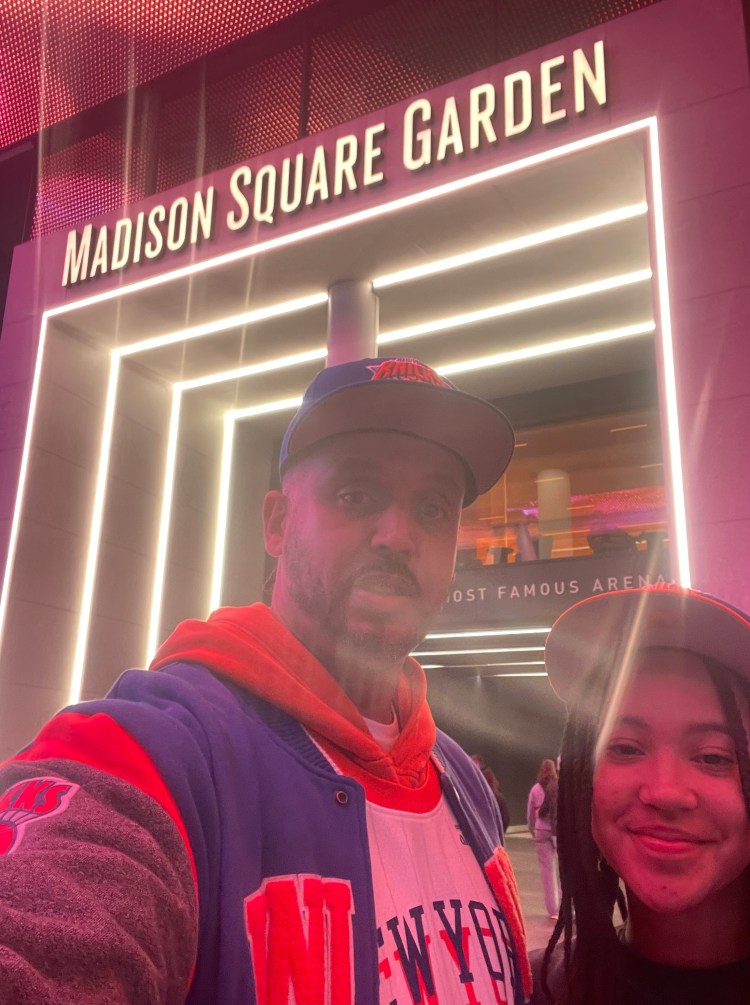
I have waited my whole life to write that sentence down and mean it.
Being a Knicks fan is a long education in disappointment. There were false dawns, big signings that went nowhere (Marbury, Stoudamire, Melo), promising seasons that ended a round too early, and nights that convinced us this was finally the one, right up until it wasn’t! That history settles into you and teaches you to wait before you let yourself believe anything.
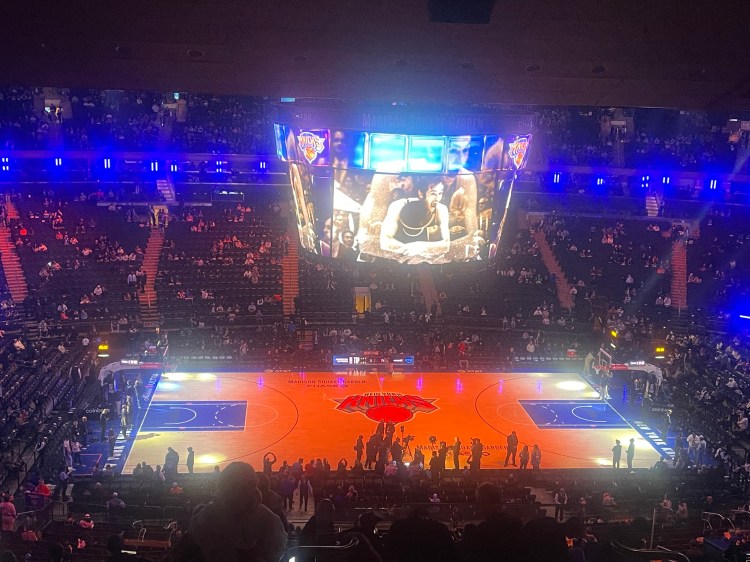
I was in Madison Square Garden for the second game of the season against Boston. The Garden was loud, the roster looked like it might actually be ready to go further than last season, and the crowd was ready to fall in love. I wanted to fall in love too, but I had sat in that seat before, the way every Knicks fan has, so I kept my hands in my pockets and waited for the catch.
The catch never came.
Nobody outside New York gave us a chance, and almost nobody gave Brunson one either
To understand what this team did, you have to understand how little the rest of the basketball world thought of it.
Start with our best player, Jalen Brunson. He went 33rd in the 2018 draft, a second round pick, after a college career good enough to win National Player of the Year and two NCAA championships at Villanova. The league looked at a 6-foot-2 guard and decided the tape measure mattered more than the basketball. His own teammate Mikal Bridges, who watched him slide down the board that night, later said he could not work out what more Brunson was supposed to have done to convince anyone to draft him higher.
The doubt didn’t stop once he got ‘good’. When the Knicks paid him more than 100 million dollars, plenty of people called it an overpay for a small guard. Becky Hammon, a respected coach, said out loud what a lot of the league quietly believed, that you cannot win a title when your best player is that size, and that New York simply did not have a genuine number one option. The polite version of the same idea followed Brunson everywhere. A nice player, a tough player, but not the kind of man you build a championship team around.
So by the time we reached the Finals, the verdict had already been written for us.
The Spurs were the story, and we were the warm-up act
The narrative going into the Finals belonged entirely to the San Antonio Spurs. Victor Wembanyama is the most hyped young player in the world, the Spurs had just knocked out the defending champions, and the basketball press lined up behind them without any hesitation. We opened as underdogs and most of the ‘expert’ picks came down to the same lazy logic, that betting against Wembanyama simply felt foolish.
Here is the part that still makes me laugh. Even after we went up three games to one, even after the largest comeback in Finals history, the bookmakers still made the Spurs favourites to win Game 5 and drag the series back to New York. We were leading the Finals and being told we were going to lose it. And the detail that buries all of it is this. The Spurs had home advantage and the home crowd, and they did not win a single game in their own building the entire series. We won three times in San Antonio, the championship-clincher among them, and left their supporters sitting in their seats listening to ours celebrate. The only game they did win, they had to come to New York to get. That is how little belief there was in this team, right up to the night it lifted the trophy on someone else’s floor.
We built around people who already knew how to win together
The answer to all of it was never going to be a bigger star. It was a better team.
Brunson, Bridges and Josh Hart won a national title together at Villanova and then chose to rebuild that same thing in New York. When we finished the job on June 14th 2026, the three of them became the first set of teammates ever to win both an NCAA championship and an NBA championship together. That is the whole argument in one fact. We did not go hunting for a saviour to parachute in. We went and got people who already trusted each other under pressure.
For decades the Knicks looked for the answer in marquee signings and star power, and for decades the answer never came. This time we stopped searching for one man to save us and built a room instead.
The humility held even when it would have been easy to lose it
What stayed with me through the whole run was how little this team needed to tell you how good it was.
After we won the NBA Cup in December, Brunson called it a stepping stone and said the team could still get better. The captain treating the first trophy in 53 years as a checkpoint rather than a destination, set the tone for everything that came after.
You saw the same thing at the very top of the run. After clawing back from 29 points down to win Game 4, the biggest comeback the Finals has ever seen, there was no sense around the group that the job was done, because it wasn’t. They still had to go to San Antonio and close it out. Asked afterwards whether he had ever doubted the team, Brunson just shook his head and talked about trusting the work and never being afraid to fail. Mike Brown, our head coach, stood in the middle of the celebration once it was finally over and admitted he could barely believe it was real. None of them spent the run telling the world it was inevitable. They spent it working.
The coaching change that was supposed to fail
The Knicks fired Tom Thibodeau after last seasons conference finals run, which is not something most franchises do. They then ran a coaching search that got picked apart in public. Mike Brown wasn’t the first name on the list. He arrived as a secondary choice after the team failed to get permission to speak to the coaches it wanted more.
Then for half a season it looked like the doubters had a point. Brown could not get the best out of Karl-Anthony Towns, our most talented big man. Towns had been excellent under Thibodeau, but in the new system his numbers fell across the board, his rhythm vanished, and at times he was getting pulled out of games down the stretch. All year he made it plain that he felt he was the one carrying the biggest adjustment and the biggest sacrifice. The fit looked wrong, and there was real friction between the coach and his star.
This is where Brown showed you who he is. The easy move, the one most coaches reach for, is to decide the system is ‘right’ and the player has to bend to it. Brown decided the opposite. He said plainly that when the plan was not working with Towns, the person who needed to adjust was him, not the player. Who adjusts, the great player or the coach? “Me,” he said. So he scrapped the offence he had started the year with and rebuilt it around what Towns actually did well, turning him into a playmaking hub instead of leaving him to wait for scraps. By the Finals, Towns had gone from an awkward fit to one of the most efficient big men in the entire playoffs, posting 39 points and 25 rebounds across the first two games against San Antonio.
That is what accountability actually looks like, and it is the opposite of what most people think it means. Not a coach demanding more from everyone beneath him, but a coach willing to change himself first. Brown said before the Finals that he had even hoped the season would throw rocky patches at the group, because the only way to find out whether an organisation stays together is to put it under strain and watch. By then he had already proved he meant it. Players were accountable to coaches, coaches were accountable to players, and everyone answered to the same goal. Rick Brunson coached on that staff while his son led on the floor, and neither of them needed the credit.
The part where it should have fallen apart
None of this would matter if it hadn’t been tested, and it was tested almost to breaking.
The regular season was a grind. There was an 11 game stretch where the team won 2 games. It was ugly enough that owner James Dolan went on WFAN, New York’s main sports radio station, in January and said out loud that this team should reach the Finals and should win them. The league shrugged at the idea that this roster could win anything at all. Then Atlanta took a two-to-one lead in the first round, and just like that the season everyone had mocked was also the season they wanted to burn down. Fire Mike Brown, break up the core and start again.
It didn’t start again. It turned, and it turned hard. We won thirteen straight in the postseason, the second-longest streak in playoff history, and finished the run 16-3. Eight of those wins came one after another on the road, which tied the all-time NBA record, and the ninth, the night we clinched in San Antonio, broke it outright. No team in the history of the playoffs has ever won more games in a row away from home.
The Finals against San Antonio is where character stopped being a word and started being a scoreboard. It is easy to have character with a 20-point lead. We had to find ours 20 points down, five nights running, and it held every time.
The Spurs won all five first quarters by a combined 57 points. Game 4 is the one nobody in New York will ever forget. By half time the Spurs were up 27, the Garden had gone flat, and the series looked like it was about to slip back to Texas level at two games apiece. Then Wu-Tang Clan, Staten Island’s own, came out for the half time show and dragged the whole building back from the dead, and as he left the floor Method Man told twenty thousand people exactly how it was going to end: “Knicks in 5.” We were down 27 when he said it. The deficit grew to 29 in the third quarter, the point where most teams quietly start thinking about getting ready for the next game. We came back and won 107-106 on an OG Anunoby tip-in with 1.2 seconds left, the biggest comeback in Finals history, and then we did the same thing again. We erased double-digit deficits in all five games of the series and still won four of them.
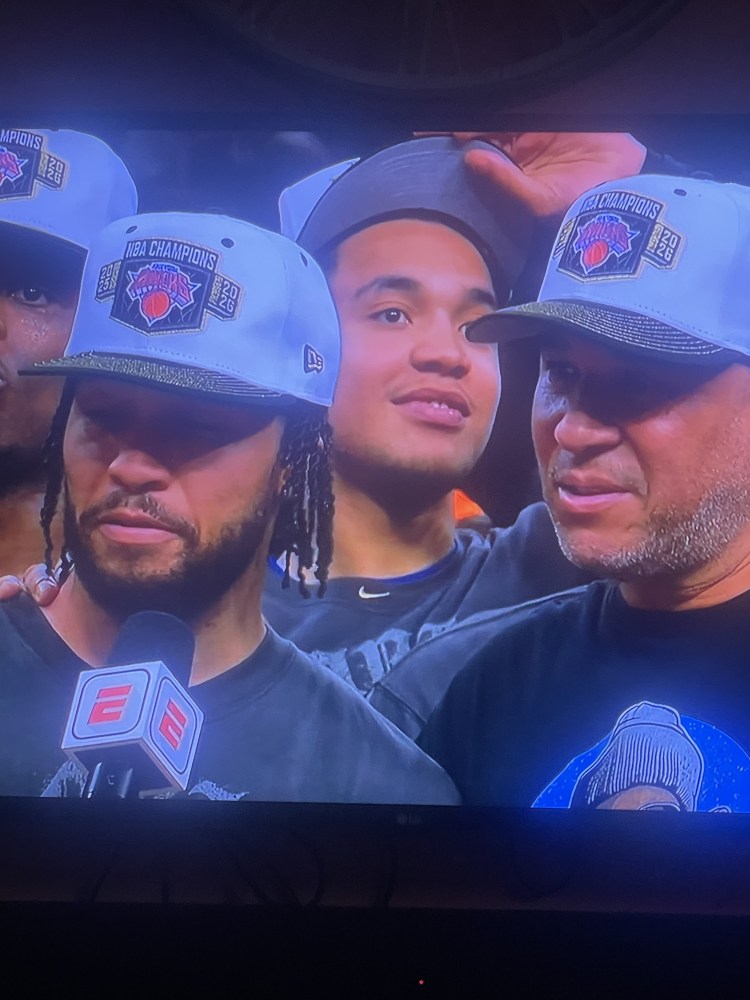
In Game 5, on the road, with thousands of our own fans who had made the trip down to Texas, Brunson scored 45 and we closed it out 94-90. First title since 1973. Fifty-three years. Knicks in five, exactly the way a man from Staten Island had called it from the Garden floor while we were 27 points down.
We also became the first team ever to win the NBA Cup and an NBA championship at all, never mind in the same season, which sounds like a footnote until you remember the Cup has only existed since 2023 and the two teams that won it before us never got near a title in those years.
A Brunson finished what a Brunson started
There is one more piece of this I cannot leave out, because it is the part that turned the whole thing personal. I mentioned Rick Brunson is on the coaching staff. What I left out is that he was also on the last Knicks team to reach the NBA Finals.
In 1999, there was a Brunson on the roster then too. Rick Brunson was a backup guard scrapping to keep a place in the league, a man who would pass through eight teams in nine years. He barely featured in that series, one appearance for about ten seconds, which happened to come in the only game New York managed to win. The Knicks lost that Finals to the San Antonio Spurs, and a two-year-old Jalen spent the whole season toddling around his father’s locker room, far too young to hold on to a single memory of it.
Twenty-seven years later the son walked back into the same building as the best player on the team, with his father now watching from the bench. The Knicks reached the Finals again, and of all the franchises it could have been, the opponent was San Antonio. This time the Brunsons didn’t lose. Jalen finished the job his dad never got to finish, against the same team, in five games, the same number it had taken the Spurs to break New York’s heart the last time around. Rick has said the 1999 run meant the world to him as a player, but watching his boy stand on that stage meant so much more.
You can’t plan a story like that! What you can do is build a team that people want to win for, pass the same stubborn work ethic down from one generation to the next, and put yourself in the moment often enough that one day the circle finally closes.
What this means if you lead anything
You don’t need to care about basketball to take something from this. Strip the sport away and what is left is a handful of arguments about how groups of people actually win, and most of them cut against your instinct.
The first is about how you fix a team that is falling short. The reflex almost everywhere, in business and in sport alike, is to go and acquire a star, the one brilliant hire who is supposed to drag everyone else up to their level. It works far less often than people believe, because brilliance you import has not been through anything alongside the people it is meant to rescue. A group that already trusts each other, that has taken losses together and stayed in the room, will usually beat a more gifted collection that hasn’t. The Knicks learned this the slow and expensive way, spending fifty years chasing saviours and winning nothing, then winning the lot the year they stopped. Most of the time the answer is not a bigger name, it’s the people you already have, pointed in the same direction.
The second is about what accountability really is, because the popular version of it is backwards. Accountability is not standing over your people and demanding they rise to your standard. The harder and far rarer version is turning it on yourself first, deciding that when the plan is not working, you’re the one who has to change rather than them. That’s almost the opposite of how most leaders behave, because it means admitting out loud that your own approach was the problem. It is also the quickest way to unlock someone who is struggling, which is exactly what happened when Mike Brown rebuilt his entire system around Karl-Anthony Towns instead of forcing Towns to bend to the system.
The third is about noise, and about who gets to set your timeline. There will always be people, usually loud and usually certain, telling you that you’re not good enough, that you’re not built for the thing you are trying to do. You can spend your energy arguing with them or you can spend it on the work, but you don’t get to do both. If you’re waiting for those voices to come round before you fully commit, you have things in the wrong order. The belief has to come first, from inside your own room, while the evidence still says you are losing. It only ever gets proven right afterwards.
We didn’t win because we had the best player.
We won because we became the best team. And it took us fifty-three years to prove that the boring answer was the right one all along.

