
What Skepta’s “That’s Not Me” teaches About Authenticity
Most leaders lose themselves gradually, by becoming the version of a leader the room seems to want. This can look like you adjusting the vocabulary for one audience and the opinions for another, until the person who walks into the Monday briefing has very little in common with the person who walked out of the house that morning. It rarely feels like a loss while it’s happening, and the cost only shows up later as the tiredness that comes from performing a role all day.
Last week was about courage, and the fear that stops leaders saying what they think or taking action. This week is about the quieter problem underneath it, which is the leader who no longer knows what they think, because they’ve spent so long working on what they’re supposed to sound like.
The Track
By 2011 Skepta had spent years as one of the most respected underground MCs in grime, releasing his first two albums independently. Then he signed with a major label for “Doin’ It Again”, an album built to take him into the ‘pop’ charts the way Tinie Tempah and Tinchy Stryder had already gone. It worked up to a point, with “Rescue Me” reaching number 14, with the album peaking at number 19. Many day one grime fans heard it as a watered-down Skepta, and the follow-up mixtape in 2012 sounded like an artist who wasn’t sure which version of himself to be.
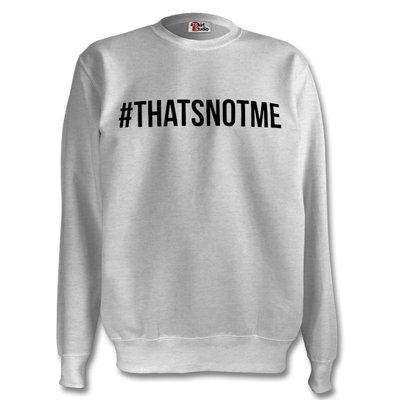
In March 2014 he released “That’s Not Me” with his brother JME, and the title says what the track is about. He was turning his back on the image he’d been sold and going back to the sound he came from. In The 10 Character Commandments of Leadership I write about the industry plant, the artist manufactured by a label to sell records rather than built from their own voice, and the major-label years had been pulling Skepta towards that kind of image. “That’s Not Me” was him refusing it in public. The video, shot by the duo Tim and Barry with the brothers green-screened in front of footage made to look like an old home recording, cost £80. It won Best Video at the MOBO Awards that October, and when Skepta collected the award he talked about how, coming from the streets, you feel you have to keep up with videos that cost a hundred thousand or a million pounds. The track reached number 21, it later appeared on Konnichiwa, and in 2016 that album won the Mercury Prize.
The detail most people remember from the track is the clothes. Skepta names the designer labels he’d been wearing, Gucci and Louis Vuitton, says he’s thrown the lot in the bin because they aren’t him, and went back to wearing tracksuits. In interviews afterwards he explained why. He told the writer Dan Hancox in 2015 that he’d realised none of those brands’ campaigns featured anyone who looked like him or came from where he came from, so he couldn’t see why he was paying for them. In a 2016 interview with Hypebeast he gave a second reason: he’d noticed that younger kids were buying those labels because he wore them, and he wanted them copying clothes that were actually theirs. From there, he said, he started getting rid of everything that had nothing to do with who he was.
Where the Rules Run Out
Nothing in a job description tells you how much of yourself to bring to the role. New leaders are handed policies, targets and frameworks, and a great deal of unspoken advice about how a leader is supposed to come across. Most of us absorb it without noticing. We copy the language of the people who promoted us, we pick up a tone for governors and a different one for staff. Somewhere along the way the question of who we really are stops coming up, because the role seems to answer it for us.
It’s right here, in this space, where our authenticity gets tested. The moments when the leader you’re expected to be and the person you are point in different directions. Nobody will tell you which one to follow. This is Commandment 3, Never Lead What You Don’t Live, and it comes straight after courage in the book because the two depend on each other. Courage lets you say what you think; authenticity makes sure what you say is actually yours.
Skepta’s second reason for binning the designer labels is the one leaders should sit with. He realised the people looking up to him were copying what he did, and he decided that whatever they copied should be true. Every leader gets copied in the same way a team picks up its habits from what the leader does far more than from what the leader says.
The Pressure That Bends the Judgement
The pressure here is approval. Skepta’s comment at the MOBOs gets to the heart of it, because the pull he described wasn’t really about money. It was the sense that everyone around him was doing it a certain way, and that falling short of that would mark him out as not being good enough.
Leaders feel that exact same pull, and in schools it often comes dressed as professionalism. You hold back the humour that used to put a nervous new teacher at ease because it doesn’t seem to fit a senior role. You agree with a direction in the leadership meeting because the Headteacher is clearly invested in it, and then defend it to staff in someone else’s words. Neither choice looks like a compromise at the time, and each one gets rewarded with a little approval, which is exactly why the pressure works.
Reading it on the Dial
Authenticity sits on a dial like every other virtue in the book. Turned too low, it becomes performance, the leader who has a voice for every audience and none of their own, and whose team can never quite tell what they really think. Turned too high, it becomes self-indulgence, the leader who uses “this is just who I am” to excuse being blunt or unreliable, and who treats every piece of feedback as an attack on their identity.
Skepta’s story sits at the right setting. He didn’t refuse to grow or to reach a bigger audience, and Konnichiwa took grime further than it had ever gone. What he refused was changing the substance of who he was to get there. For a leader, that means adapting how you say things to the people in front of you while keeping what you say, and most importantly, why you are saying it, recognisably yours.
What it Does to the Culture
Teams are very good at spotting a performance, even when they couldn’t explain how they know. When a leader speaks in borrowed language, people stop listening for what they mean and start listening for what they want, and trust thins out. Staff start performing back, telling the leader what they think the leader wants to hear. Before long the whole building is running on an account of the truth that everyone has agreed to repeat and nobody quite believes.
The opposite spreads just as quickly. When a leader is recognisably the same person in the staffroom and in the governors’ meeting, people learn that it’s safe to be themselves at work, and that shows up in the honesty of the conversations a school can have about its own problems. Skepta’s £80 video reached further than the expensive ones partly because people could tell it was real. The same principle applies to our leadership. Teams will follow someone they can read long before they’ll follow someone who seems polished.
The Refusal it Leaves You With
Never Lead What You Don’t Live. The leaders whose teams trust them have usually decided which parts of themselves aren’t up for negotiation, so that when the pressure to fit the role arrives, they know what they’ll adapt and what they’ll keep. Skepta made that decision after a few years of trying the other way, and the work that followed was the best of his career to date.
The question the track leaves for anyone who leads is whether the person your team meets on a Monday morning is someone your family would recognise, and if not, what it’s costing you and them to keep up the difference.
Wisdom Wednesdays draws on The 10 Character Commandments of Leadership by Adrian McLean, out now. Each week takes one track and one of the ten commandments, and the book works through all ten pressures in full, with the self-assessment and the virtue dial behind each one. Read it here: https://www.amazon.co.uk/dp/B0H8HYN78Z

