When the line moves one decision at a time
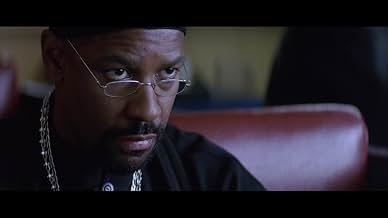
Training Day is my favourite film and Denzel Washington is my favourite actor, so it was inevitable that, 25 years (yes, I know!) after the film came out in October 2001, I would end up writing about Alonzo Harris, the films central character.
I’ve watched it more times than I can count and I know what’s coming in every scene, but I still find myself thinking about it long after the credits. That has less to do with Denzel’s Oscar winning performanace than with what Alonzo shows me about leadership. I keep coming back to him because I recognise more of myself in him than I’d like to admit.
Actually, I’ll go further.
I admire him.
Yeah. I said it.
Not the corruption or the way he uses people, but the presence. The confidence and swagger, the way he takes control of a room, the refusal to be intimidated and the instinct that when things get difficult someone has to make the call. As a leader, I can see why someone like Alonzo gets things done, and being completely honest, I can see how I could’ve become him.
I’ve always wanted to win and to be the person who walks into a hard situation and makes things happen, and I’ve felt the pull of believing that if the outcome is right, the method might matter less than we think. I’ve been in meetings where someone senior made clear the result they wanted, and caught myself working out how to deliver it before I’d asked myself whether I should. A clear example came when our pastoral team was told that attendance had to improve rapidly, and my first instinct was to look for the quickest way to move the figure rather than understand why those pupils weren’t coming to school in the first place.
Where Alonzo and I part company is on what happens next. He believes the outcome justifies the method. I don’t. I learnt that the hard way, which is probably why the film still has such a hold on me. Alonzo doesn’t set out to make Jake a better cop. He sets out to turn him into someone else, and he does it one small decision at a time.
Alonzo Doesn’t Break Jake
Alonzo doesn’t tell Jake on his first morning to forget everything he believes, because that would fail within minutes. He moves the line a little at a time instead, manufacturing situations where Jake’s sense of right and wrong gets in the way, controlling the information he gives Jake and when he finds it out. He then repeatedly hands him a reason why the uncomfortable thing has to happen.
The drugs scene early in the film shows the whole method in a few minutes. Alonzo confiscates a bag of marijuana from a group of buyers and tells Jake to smoke it. When Jake refuses, Alonzo pulls his gun on Jake and tells him that an undercover officer who turned it down on the street would be dead, making it plain that Jake’s future on the unit depends on going along with it.
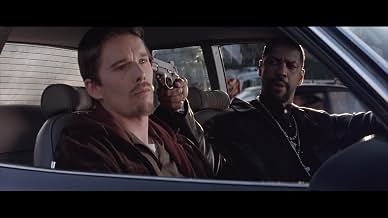
Jake smokes it.
Only afterwards does he find out it was laced with PCP. He has crossed his first line before lunch, and for a reason that sounded professional at the time.
Alonzo never persuades Jake that wrong is right. He persuades him that the situation is different, that the rules he learned don’t apply out here, and that if he wants to survive on the street then he needs to stop thinking like a rookie. Most compromise works like that. It starts with something small enough to explain away and builds until you look back and find that the line you said you’d never cross has moved, usually without you noticing when.
“It takes a wolf to catch a wolf.”
That’s Alonzo’s whole philosophy in one sentence. If the people you’re up against don’t play by the rules, neither can you.
In schools, Alonzo’s lines rarely sound sinister. They sound like this:
“That’s just how the data works.”
“Every school does it.”
“You’re new to leadership, you’ll learn.”
“We can’t afford to be precious about this before inspection.”
Each one asks you to accept that your situation is the exception. It’s worth asking yourself which of them you’ve heard in the last term, and which of them you’ve said to someone else.
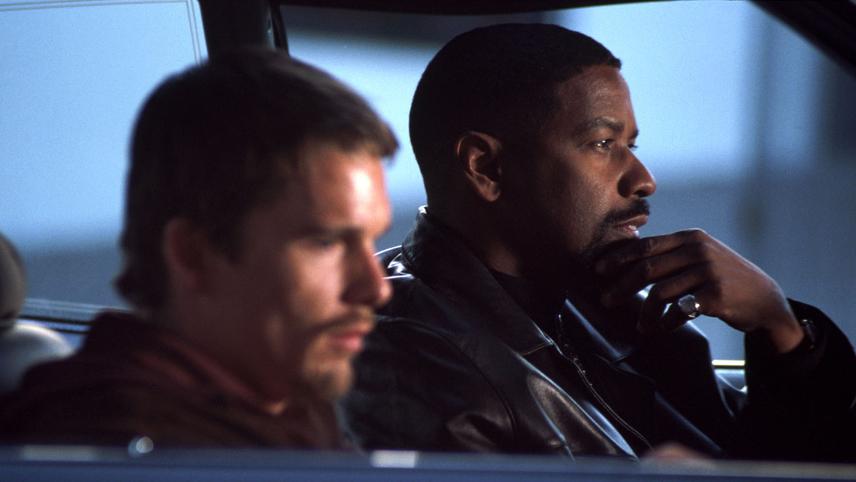
Alonzo’s Standards
It would be easy to label Alonzo a corrupt cop and leave it there, but he has standards, and that’s what makes him dangerous. He expects loyalty and competence, he demands courage, and he has no patience for people who don’t deliver… I told you I recognised myself in him!
The problem is that every one of those standards now serves one test, which is whether it works. Once that’s the only measure, any method that gets the result becomes acceptable. You can be disciplined, decisive and ambitious and still make decisions that are wrong.
The film also shows us why Alonzo’s day is so frantic. He owes the Russian mob money and has until midnight to pay. A lot of what he sells to Jake as street wisdom is really Alonzo looking after himself and calling it the ‘job’. That’s the bit that gets under my skin, because self-interest passed off as necessity is the excuse I’m most likely to fall for myself.
The First Commandment
The first commandment in my book, The 10 Character Commandments of Leadership, is:
Never sacrifice your integrity.
I didn’t put it first because I think integrity outranks every other virtue. I put it first because once you start negotiating with your integrity, everything else slides with it.
I found out what that costs earlier in my career. I can’t go into the details without identifying the school and the people involved, but the short version is that people senior to me asked me to do something that crossed a line.
I wouldn’t do it.
I refused, and in the end I resigned. Leaving was hard and it came with consequences I still live with, and my coach at the time helped me work through what followed.
What I remember most is how reasonable the alternative was made to sound. I could’ve told myself that one compromise was a fair price for staying and protecting the things I cared about, or that my objection was naive. I’d be lying if I said neither argument tempted me. Integrity is rarely tested by someone asking you to do something obviously wrong. It gets tested when the request comes with authority behind it, a sensible reason attached and your job on the line.
That’s Alonzo’s game. Make the compromise sound reasonable.
The Cost is the Point
Anyone can claim integrity when doing the right thing costs them nothing. The test comes when it gets in the way, like when telling the truth threatens your reputation or when everyone around you insists the line isn’t really a line. Alonzo spends the whole day setting up those moments for Jake, and each time he offers something back, usually status or a way into the world Jake wants to join.
The answer to him comes in a scene that seems minor the first time you watch it. Driving through the city, Jake sees two men attacking a schoolgirl in an alley, and he jumps out of the car and stops them. Afterwards he picks up her dropped wallet. Alonzo lets the attackers go, and nothing about saving the girl helps Jake impress the man who controls his future.
Hours later, Alonzo leaves Jake at Smiley’s house, where the plan is to kill him in the bathtub. The gang find the wallet in Jake’s pocket. The wallet belongs to Smiley’s cousin, the girl from the alley, and when she confirms what Jake did for her, Smiley lets him go.
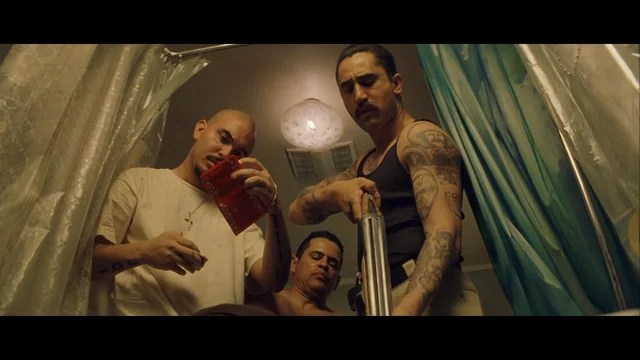
The one thing Jake did purely because it was right, with no audience and no reward, is what saves his life. Jake didn’t know anyone was keeping score.
That’s why integrity has to be practised long before the day you need it.
Jake’s Real Test
What puts Jake in that bathtub is the moment he finally refused to go along with Alonzo’s manipulation. Earlier that afternoon, Alonzo leads his crew into Roger’s house on a fake warrant, takes the money hidden under the kitchen floor and shoots Roger dead. The story the crew agrees on is that Jake fired the shot. This isn’t bending the rules any more. Jake is being asked to become a man who can live with a killing and a lie.
He says no.
He refuses his share of the money and holds his ground while the rest of the crew have their guns on him.
Jake isn’t perfect, which is part of why I also identify with him. He’s ambitious, he wants to prove himself, and he’s already gone along with more than he should have that day. He has always known the difference between right and wrong. What he has to work out, with the pressure on, is what doing the right thing actually requires of him. This is what I mean by practical wisdom: the judgement to see what should be done in the circumstances in front of you and the character to go through with it. Values on a wall won’t make that decision for you, whether you’re in a kitchen full of armed officers or a meeting where your career is on the line.
By this point, the two men are asking different questions. All day, Alonzo has been asking: Will it work?
Jake has arrived at: Is it right?
Is it right?
Where Alonzo’s Authority Runs Out
The ending shows what Alonzo’s kind of authority is really worth. Jake tracks him down in the Jungle, the neighbourhood Alonzo has controlled through fear for years, to take back the money Alonzo stole from Roger’s house; the money he needs to pay the Russians before midnight. The two men fight in the street while residents and gang members look on. When Alonzo calls on them to deal with Jake, nobody moves. They let Jake walk away with the money, and people who did what Alonzo told them a few hours earlier go back inside and shut their doors.
They’ve just watched him lose the fight and the money, and they can see his hold over them won’t last the night. Fear only works for as long as you can follow through on it. Character is what people respond to once the threat has gone, and Alonzo has spent years building the first and neglecting the second.
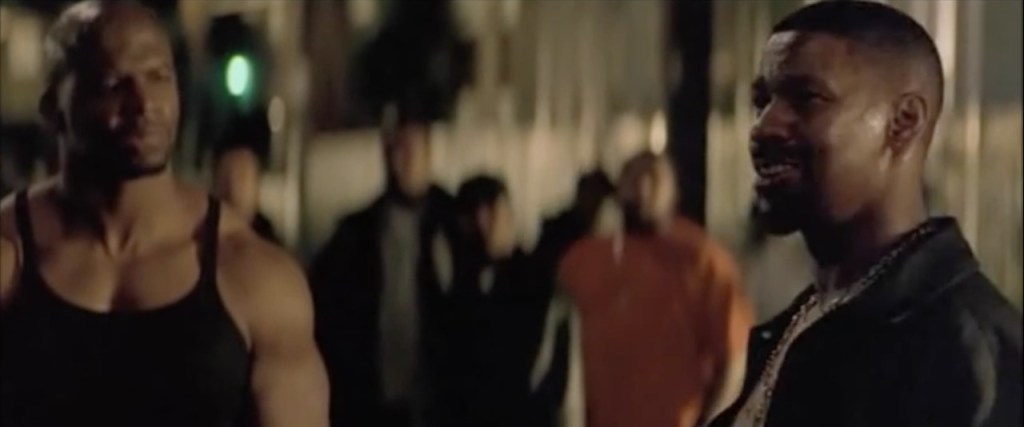
Alonzo is left alone in the street, shouting threats that no longer mean anything.
Alonzo told Jake it takes a wolf to catch a wolf. In the end, it took someone who refused to become one.
Twenty Five Years Later
The pressure to compromise hasn’t gone away; it has just changed setting. In schools it rarely looks like a shooting in a kitchen. It can look like a pupil who quietly leaves the roll before census day, a qualification chosen because it moves the league table rather than because it serves the child, coursework support that drifts into teachers doing the work rather than pupils, or a picture of the school given to inspectors that is technically accurate and still misleading. Each of them starts with someone telling you that everybody does it, or that the morality can wait until the results are in.
I’m sure this pressure will get sharper. Data dashboards and AI tools are getting very good at telling leaders what will move a number and how quickly, so Alonzo’s question is becoming cheap and instant to answer. Jake’s question still needs a person with the judgement to ask it and the character to act on the answer. That combination is the part of leadership we’ll come to value most.
I still love Denzel’s performance, but I watch the film differently now. When I was younger I saw a brilliant villain. Now I see a man with the same instincts I recognise in myself, who stopped asking whether something was right because the question kept getting in his way. I could have become him, and the reason I didn’t comes down to what I chose on the days when winning and doing the right thing pulled in different directions.
That’s why the first commandment matters. Know where your line is and why it’s there, and when someone starts trying to move it, recognise what’s happening.
The line rarely moves all at once.
It moves one decision at a time.
Boom.