Never Put Power Before People: What Stormzy’s “Superheroes” teaches About Service
This post goes out on Remembrance Day, and it would be wrong to write about service today without starting with the people who gave the most of it. At eleven o’clock the country falls silent for those who served and died in war, and for those who came home and carried it for the rest of their lives. That’s the ultimate service, given by people who had no idea whether anyone would remember their names. Most of us will never be asked for anything close to that.
What the rest of us are asked for is far smaller, and it comes round every single day. It’s the decision about whose needs come first when the diary is full and the pressure is coming from above. Stormzy’s “Superheroes” is about that quieter kind of service, the kind any leader can give on an ordinary Tuesday, and it starts with an honest look at who you’re really working for.
If you want to know who a Headteacher really serves, don’t read the schools mission statement, look at their diary in a busy week. You’ll see how much of it goes on the Multi Academy Trust, the governors and the next inspection. How much goes on the pupils and staff who will never be in a position to promote them to their next role? Every leader serves someone. The commandment this week is about which direction you’re facing when you do it.

The Track
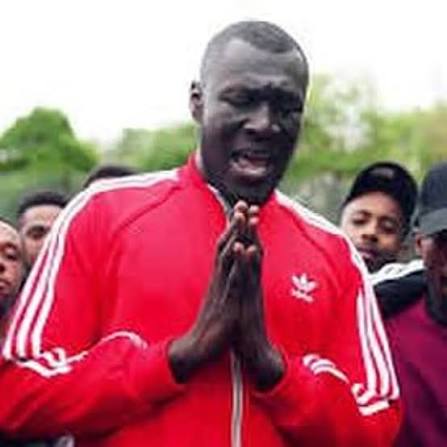
“Superheroes” is on Heavy Is the Head, the album Stormzy released in December 2019, a few months after he became the first Black British solo artist to headline Glastonbury. At the peak of his power, with the biggest stage in the country behind him, he wrote a song aimed squarely at young Black children, telling them they’re worth more than the world might lead them to believe. When the animated video came out the following year, he premiered it in schools across the UK, and he told pupils that everyone is a superhero in their own right, especially the young people whose talents tend to get overlooked.
What makes the song worthy of space in this blog post is what he’d already done off the record. In 2018 he set up the Stormzy Scholarship at the University of Cambridge, paying the tuition fees and living costs of two Black British students a year. HSBC UK later agreed to fund ten more a year, and by 2025 the university said 55 students had been supported, with Cambridge crediting a “Stormzy effect” for a rise in applications from Black students across the country. The same year he launched #Merky Books with Penguin Random House to publish new writers, and in 2020 he pledged £10 million over ten years to organisations working for racial equality in Britain.
None of that was required of him, and very little of it benefited him directly. He had power, and has kept pointing it at people who have less.
Power Pulls Upwards
This is Commandment 7: Never Put Power Before People, and the pressure behind it is the way power naturally flows in organisations. In a school, almost every consequence that matters to a leader’s career comes from above: the trust, the governors, the inspectors and the league tables. The people below you rarely have the power to reward or punish you. So without anyone deciding it, more and more of a leader’s time and best thinking starts flowing upwards.
Service, in the sense this commandment means it, is the decision to push against that pull. It’s using whatever power you’ve been given for the benefit of the people who can’t do anything for you in return. Doing it on purpose, because left to itself the pull only goes one way.

What it Looks Like in a School
The clearest test is the timetable. In plenty of schools, Year 11 gets the strongest teachers, because Year 11 results are the ones that get published and compared. Year 7 gets whoever is left, often early career teachers and non-specialists, with more than their fair share of cover. Nobody plans it that way out of malice. It happens because the accountability sits at the end of Year 11, so that’s where the power sends the ‘best’ people.
I think it’s madness, and it’s a cycle we keep choosing. The gaps that open in Years 7 and 8 are left to grow until they become a Year 11 problem, and then we pull our best teachers back into Year 11 to run intervention and close gaps that should never have opened in the first place. Every year we end up playing catch-up, and every year the children who joined us at eleven get the worst deal at exactly the age when the right teacher would make the biggest difference. That’s power before people in its simplest form: the timetable serves the results we’re judged on rather than the pupils who need us most.
I’m not the only one saying this, and I wholeheartedly agree with Mary Myatt, who has been arguing that Key Stage 3 shouldn’t be a waiting room for GCSE. Through The Ambitious Years, her work with Catherine Priggs, she’s pushing schools to treat Years 7 to 9 as intellectually serious years in their own right, while Big Education’s Rethinking School project is helping whole schools look again at how they are set up and who that set-up really serves. Ofsted raised the alarm more than a decade ago, when its 2015 report, Key Stage 3: the wasted years?, warned that too many school leaders treated Key Stage 3 as the “poor relation” of the exam years, with staff and resources pulled towards the older age groups. In March 2026 the government launched a Key Stage 3 alliance to build evidence on what works in the early secondary years. The conversation is finally getting louder. The question for leaders is whether our timetables will catch up with it, or whether we’ll keep sending our best teachers wherever the accountability sits.
It shows up in smaller ways too. The trust meeting always goes ahead, but the meeting with a Year 9 parent who has been trying to get through for a fortnight gets moved twice. The leadership team member gets the quiet office with the window, while the pastoral team works in a corridor with no door to shut when a child is in tears. None of these decisions feels like a choice at the time, which is exactly why they need looking at, because added together they show your staff and pupils who you really work for.
Service Isn’t Martyrdom
There’s a version of service that looks admirable and does real damage. It’s the Headteacher who covers every duty, answers emails at eleven at night, takes on every difficult parent personally and never lets anyone see them struggle. Staff are grateful at first. Over time they learn two things from it: that leadership means burning yourself out, and that the important problems in the school get solved by one person rather than by them.
Stormzy’s scholarships show the difference. He didn’t sit the students’ exams or write their essays. He paid for the things standing in their way and then let them do the work themselves. The result, to date, is 55 students supported through Cambridge rather than one famous benefactor taking the credit. Real service uses your power to make other people more capable. Martyrdom uses it to make yourself indispensable, which is still a way of putting your own position first.
Who Your Power Worked for This Week
Staff and pupils work out very quickly which way their leader faces. If they see you protect a teacher’s planning time when the trust asks for another report, or give the best room to the team dealing with the most vulnerable children, they learn that the power in the building exists to look after them. If they see the opposite, they learn to look after themselves, and a school where everyone is looking after themselves is very hard to lead.
Never Put Power Before People. Stormzy could have spent the years after his breakthrough making sure everyone knew how far he’d come. He spent a good part of them making sure kids who looked like him could go further. Most of us will never have that kind of platform, but every leader has some power, and at the end of each week it’s worth asking a simple question: who did it work for?
Wisdom Wednesdays draws on The 10 Character Commandments of Leadership by Adrian McLean, out now. Each week takes one track and one of the ten commandments, and the book works through all ten pressures in full, with the self-assessment and the virtue dial behind each one. Read it here: https://www.amazon.co.uk/dp/B0H8HYN78Z

